

Pilates and Chronic Low Back Pain Relief: Gently Activate Muscles, Reconstruct Spinal Support
Chronic low back pain (lasting more than 3 months) has become a common problem plaguing middle-aged and young people. Factors such as prolonged sitting, poor posture, and weak core cause the lower back muscles to be in a state of tension or compensation for a long time, which in turn leads to repeated pain and seriously affects daily activities. Different from traditional "pain-relief" methods, Pilates improves chronic low back pain from the root by "accurately activating deep muscles, adjusting spinal force lines, and reconstructing the lower back support system", allowing patients to get rid of the predicament of "relying on painkillers".
The core logic of Pilates in relieving chronic low back pain is to "activate the deep stabilizer muscles of the lower back and replace the superficial compensatory muscles". Many patients with chronic low back pain have the problem that "deep muscles such as the psoas major and multifidus are dormant, while superficial muscles such as the quadratus lumborum and erector spinae are over-tensed". Pilates awakens the deep muscles through "low-amplitude, high-control" movements. It is recommended to start with "supine spinal neutral position perception": the patient lies flat with knees bent, feet on the ground, and hands placed between the lower back and the ground to feel the slight gap between the waist and the ground (maintaining the natural physiological curvature of the spine). Slowly perform abdominal breathing. Each time you inhale, let the waist press down slightly (fitting the hands), and when you exhale, maintain the neutral position. Practice 5-8 minutes per set, 1-2 times a day. This movement helps patients establish muscle memory of "spinal neutrality", avoiding excessive lumbar extension or collapse in daily postures, and reducing additional pressure on the lower back muscles.
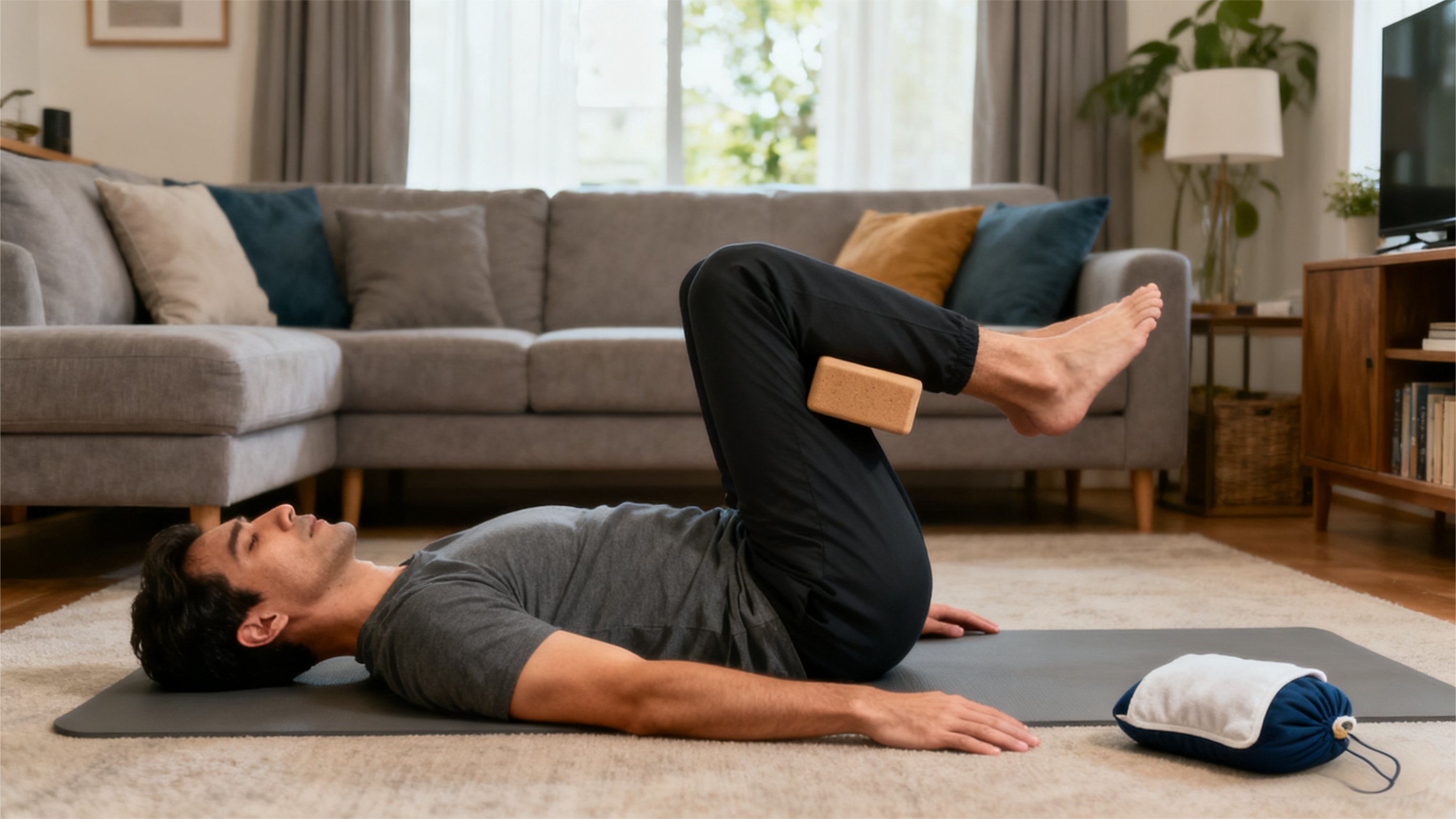
Secondly, Pilates improves lower back muscle imbalance through "combination of dynamic stretching and strengthening". For "tight lower back muscles", the "modified cat stretch" is recommended: kneel on hands and knees, keep the back straight when inhaling, slowly arch the back (lower the head and chest) when exhaling, stay for 2 seconds, then inhale to return, and then slowly sag the back (raise the head and chest), feeling the alternate stretching and relaxation of the lower back muscles, 10 times per set, 2 sets a day. This movement can relieve lower back muscle spasms, promote local blood circulation, and reduce pain and discomfort; for "weak core and lower back muscles", the "modified bridge pose" is recommended: lie flat with knees bent, feet shoulder-width apart, place a yoga block under the sacrum (to support the waist), inhale to tighten the abdominal and gluteal muscles, exhale to slightly lift the hips (without leaving the yoga block), feel the active force of the lower back muscles, hold for 3-5 seconds and then relax, 12 times per set, 2 sets a day. This movement protects the lumbar spine while gradually enhancing the strength of the lower back muscles, avoiding increased pain caused by excessive lumbar stress during training.
In addition, Pilates focuses on "integrating training memory into daily postures" to avoid repeated pain. Many patients experience pain relief after training, but relapse due to incorrect postures when returning to daily life. Pilates extends the effect to life through "posture correction training". For example, "standing spinal alignment training": stand with feet shoulder-width apart, hands hanging naturally, inhale and imagine a rope pulling upward from the top of the head, slowly straighten the waist and back, relax the shoulders backward and downward, and adjust the head, shoulders, hips, knees, and ankles to be in a straight line; exhale to maintain the posture, feel the stable support of the lower back muscles, practice 3-5 times a day, 1 minute each time. At the same time, guide patients to adjust their daily sitting posture (choose a chair with a lumbar support, keep knees and hips at the same height) and lifting posture (bend knees and squat, use leg force instead of waist force) to reduce the burden on the lower back from details.
It should be noted that patients with chronic low back pain need to "proceed step by step" when conducting Pilates training: in the early stage, focus on "perception and relaxation" movements, avoid movements that increase lumbar pressure such as bending over and twisting; consult a doctor or rehabilitation therapist before training to rule out contraindications such as acute lumbar disc herniation and fractures; if pain intensifies (not muscle soreness) during training, stop immediately and adjust the movement. Many patients report that after 2-3 months of insisting Pilates training, the frequency of chronic low back pain attacks is reduced by more than 60%, daily movements such as bending over and turning around are no longer restricted, and the quality of life is significantly improved.
Pilates provides an "active repair" solution for patients with chronic low back pain. Through gentle training, it reconstructs the lower back support system, allowing patients to shift from "passive pain relief" to "active rehabilitation" and gradually get rid of the trouble of chronic pain.