

Pilates and Elderly Health: Gentle Exercise Guards Elderly Vitality, Prevents Aging Risks
With age, the elderly are prone to problems such as muscle loss, decreased balance, and joint stiffness, which not only affect daily activities but also increase the risk of falls and fractures. Pilates, featuring "gentle control and low impact", does not require high-intensity force. By activating deep muscles, improving joint mobility, and enhancing balance, it becomes an ideal exercise to protect the health of the elderly, helping them maintain physical functions and enjoy a high-quality later life.
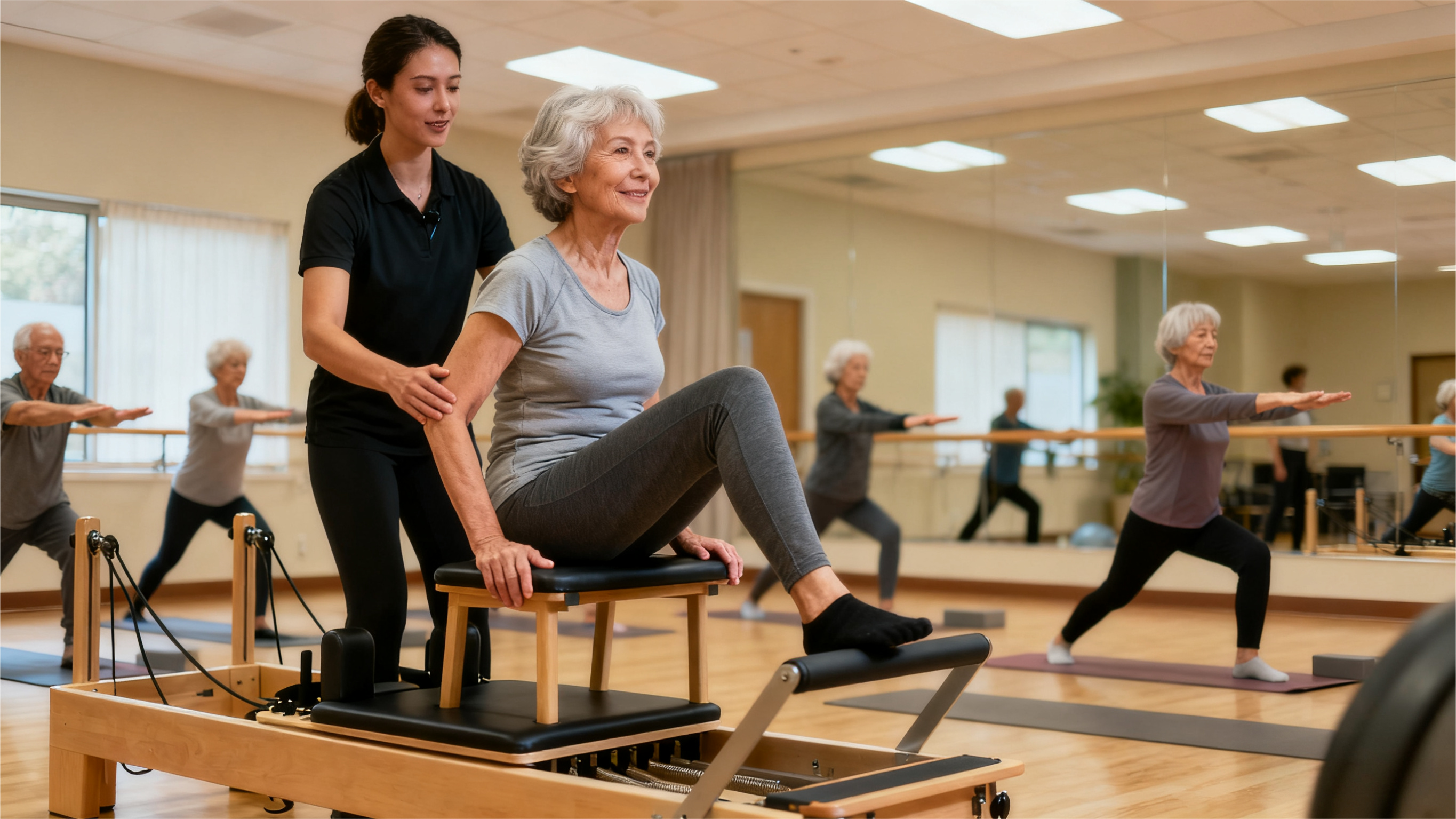
The primary value of Pilates for the elderly is to "prevent muscle loss and maintain basic strength". Due to slowed metabolism, the elderly lose about 1%-2% of muscle mass every year, and Pilates' "low-intensity strength training" can effectively slow down this process. It is recommended that the elderly start with simple mat exercises, such as "sitting leg lift": sit on a stable chair, grip the edge of the chair with both hands, slowly lift one calf (keep the knee slightly bent) when inhaling, and slowly lower it when exhaling, 10 times per side, 2 sets a day. This movement does not require standing, avoiding joint pressure, while activating the quadriceps on the front of the thighs and calf muscles; cooperate with "sitting hand stretch": make fists with both hands, slowly stretch the fingers, then make fists again, repeat 15 times to exercise the small hand muscles and prevent hand stiffness and decreased grip strength. After 1-2 months of persistence, the elderly can obviously feel enhanced leg strength when getting up and going up and down stairs, making daily activities easier.
Secondly, Pilates can "improve balance and reduce the risk of falls". Falls are common among the elderly, mainly due to declining balance and weak core muscles. Pilates' "balance training" can specifically improve this problem. Recommend "standing single-leg support" (to be done with family accompaniment or wall support): stand with feet shoulder-width apart, slowly lift one foot (the sole of the foot lightly touches the inside of the other calf), hold for 3-5 seconds, then switch legs, 5 times per side. In the early stage of training, you can hold the wall for stability, and gradually let go as balance improves; cooperate with "four-point support alternate hand lift": kneel on hands and knees (put a soft pad under the knees), slowly lift one hand alternately, keep the back straight, and enhance core stability. Studies have shown that doing Pilates balance training 3 times a week can reduce the fall risk of the elderly by more than 35%, and significantly improve body coordination.
In addition, Pilates can "relieve joint stiffness and improve body flexibility". The common neck, shoulder, waist, and knee stiffness in the elderly is mostly caused by long-term inactivity leading to muscle adhesion. Pilates' "gentle stretching" can gradually improve joint mobility. For example, "supine knee circle": lie flat with knees bent, hold the knees with both hands, slowly rotate the knees to the left and right, feel the stretch of the waist and hip joints, 8 times per side; "sitting spinal twist": sit on a chair, hold the back of the chair with both hands, slowly twist the upper body to one side, hold for 3 seconds, then return to the original position, 6 times per side to relieve waist and back stiffness. These movements have controllable ranges, avoiding injuries caused by over-stretching, while promoting the secretion of joint synovial fluid and reducing joint friction pain.
The elderly should follow the "safety first" principle when doing Pilates: do 5 minutes of warm-up (such as slow walking, joint circling) before training to avoid sudden force; choose a non-slip yoga mat or train on a carpet to prevent slipping; slow down the movement speed, do not pursue the number of completions, and take physical comfort as the standard; if there are chronic diseases (such as hypertension, arthritis), consult a doctor in advance and adjust movements under the guidance of a professional coach. Many elderly Pilates practitioners report that after persistent training, joint pain is reduced, sleep quality is improved, and even the use of painkillers is reduced, with significantly enhanced self-care ability.
Pilates provides a "safe and effective" healthy exercise option for the elderly. It does not pursue high intensity, but protects the elderly's physical functions through gentle movements, allowing them to maintain vitality in comfortable training and stay away from health risks caused by aging.