

Pilates Home Simple Movement Guide: 3 Basic Movements, 15 Minutes a Day to Train a Good Posture
For those who have no time to go to the studio and want to easily start Pilates training at home, there is no need for a complex plan. Master 3 basic Pilates movements and insist on 15 minutes a day, and you can gradually improve your posture, relieve physical discomfort, and start a healthy training journey. These movements do not require equipment, only a yoga mat, and are suitable for beginners and busy people, easily integrating into daily life.
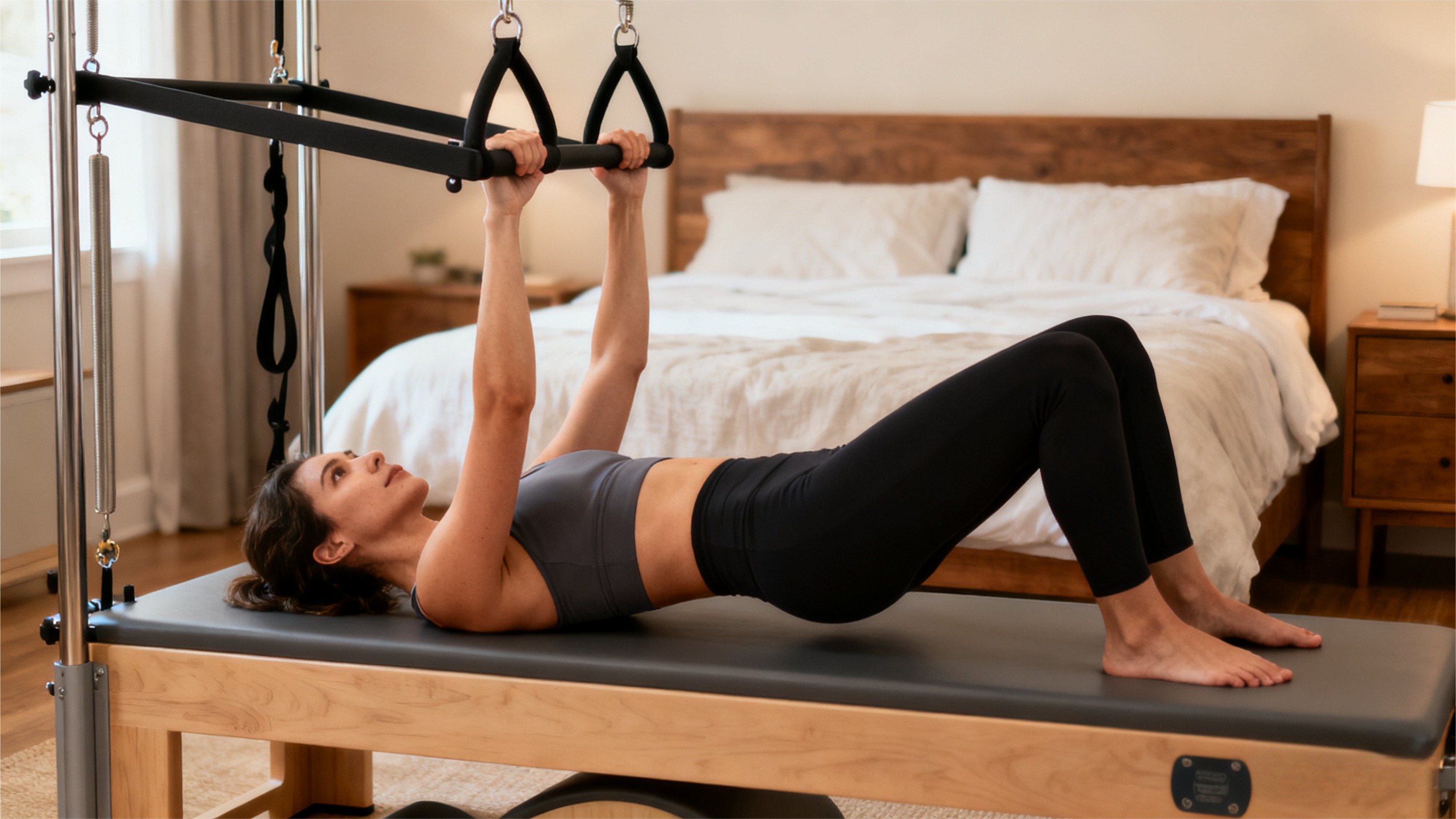
The first movement is "Pilates Crunch (Gentle Version)", which mainly improves hunchback and enhances core strength. Movement steps: lie flat with knees bent, feet on the ground, shoulder-width apart, hands gently on both sides of the head (avoid pulling the head hard); inhale to prepare, exhale to slowly lift the upper body, only the upper back leaves the ground (about 5-10 cm), feel the contraction of the abdominal muscles, hold for 2 seconds, then inhale and slowly fall back, 10 times per set, 2 sets a day. Precautions: avoid compensating with neck muscles (if the neck is sore, cross your hands on your chest), slow down the movement speed, cooperate with the breathing rhythm, and let the abdomen dominate the force. After 2 weeks of insisted practice, you can obviously feel the improvement of abdominal tightness and stronger waist and back when bending over.
The second movement is "Four-Point Support Cat Stretch", which relieves low back pain and improves spinal flexibility. Movement steps: kneel on hands and knees, hands shoulder-width apart, knees hip-width apart, keep the back straight (in a "flat plate" state); inhale to prepare, exhale to slowly arch the back (like a cat), the head naturally droops, feel the spine stretch, hold for 3 seconds; inhale to slowly restore the back to a straight state, lift the head, and look forward, 8 times per set, 2 sets a day. Precautions: those with wrist discomfort can support with fists (touch the ground with knuckles), and a towel can be placed under the knees to reduce pressure; keep the core tight during the movement, avoid waist collapse or excessive arching. This movement can relax the waist and back muscles, improve the spinal stiffness caused by prolonged sitting, and is suitable for office workers to practice during work breaks.
The third movement is "Side-Lying Leg Lift (Low Amplitude Version)", which shapes the leg lines and improves pelvic anteversion. Movement steps: lie on your side with knees bent (the lower leg bent at 90 degrees, the upper leg straight), the lower arm under the head, the upper hand supporting the body in front of you; inhale to prepare, exhale to slowly lift the upper leg (height no more than 30 cm), feel the force of the outer thigh and gluteal muscles, hold for 2 seconds, then inhale and slowly lower, 10 times per side, 1 set a day. Precautions: keep the pelvis stable (avoid shaking back and forth); if the waist is uncomfortable, a thin towel can be placed under the knee of the lower leg to reduce waist pressure; the movement amplitude is based on "physical comfort and no pain", and there is no need to pursue height, the key is the sense of muscle force. Insisted practice can improve the fat on the outer thigh, adjust the pelvic position, and make the standing posture more upright.
The total duration of the three movements is about 15 minutes, which can be flexibly arranged according to personal time: practice after getting up in the morning to awaken the body's vitality; practice during lunch break to relieve work fatigue; practice before going to bed at night to relax the body and mind and help sleep. During training, you need to pay attention to: choose a quiet and flat venue to avoid interference; wear comfortable and breathable sportswear to facilitate movement; do 3 minutes of warm-up (such as in-place stepping, joint circling) before training to avoid muscle strain; do 2 minutes of stretching (such as child's pose relaxation, leg stretching) after training to relieve muscle tension.
Many practitioners report that after 1 month of persistence, the hunchback is significantly improved, the head is naturally lifted when standing, and the waist and back are straighter; the low back pain after prolonged sitting is reduced, and the sleep quality is also improved. The core of Pilates home training is "persistence". There is no need to pursue high difficulty. 15 minutes a day allows simple movements to accumulate significant effects and gradually train a good posture.