

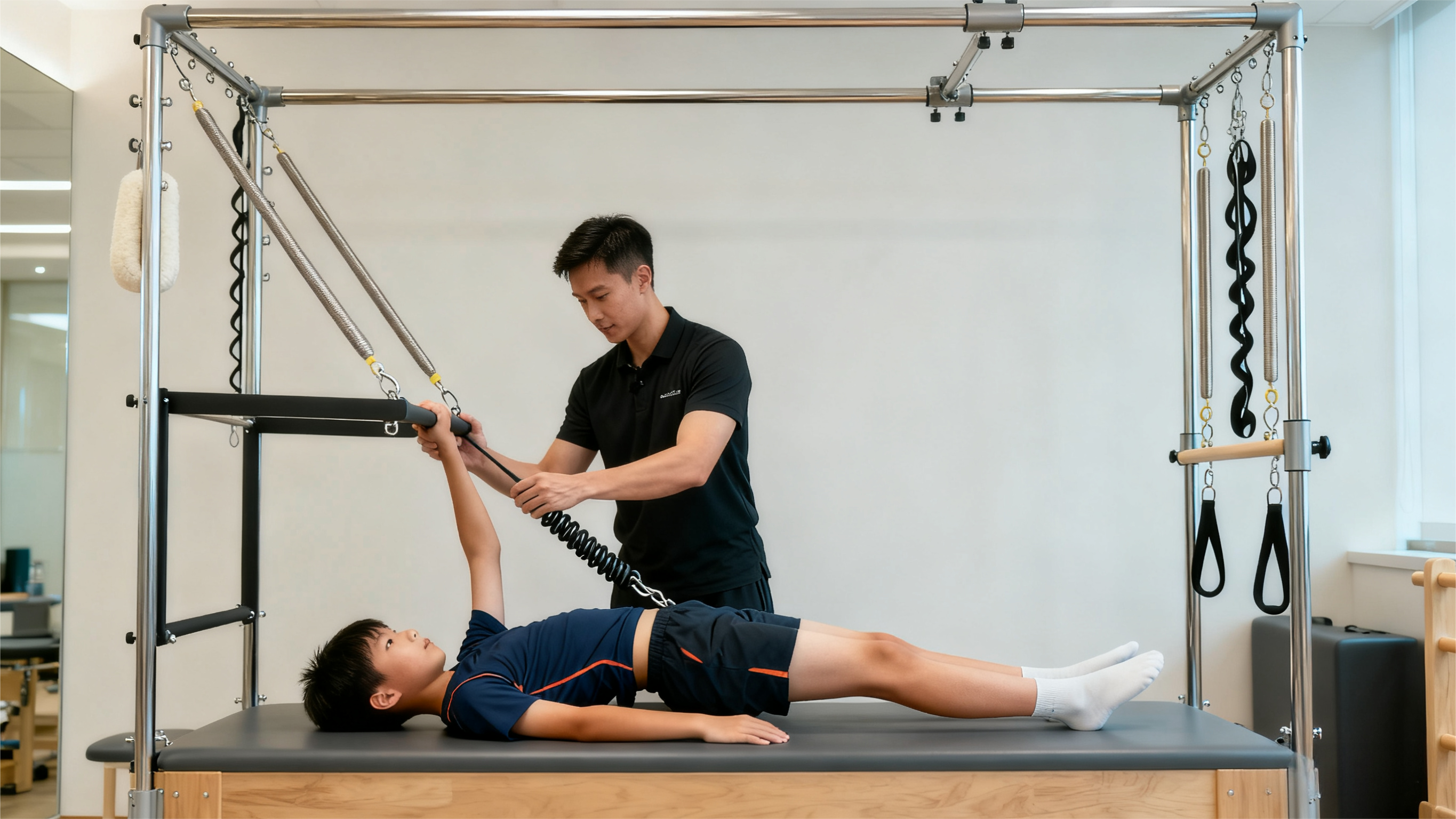
Pilates and Teen Posture Correction: Safeguarding the Critical Growth Period to Shape a Healthy Posture
Nowadays, due to bad habits such as long-term 低头 use of electronic devices and leaning over desks to study, teenagers are increasingly facing posture problems such as hunchback, uneven shoulders, and scoliosis. These problems not only affect their appearance but also may cause health risks such as back pain and poor breathing. With its precise adjustment of body force lines and gentle activation of core muscles, Pilates has become a scientific choice for teenage posture correction. It can help teenagers improve their posture and develop correct body usage habits without increasing the body's burden.
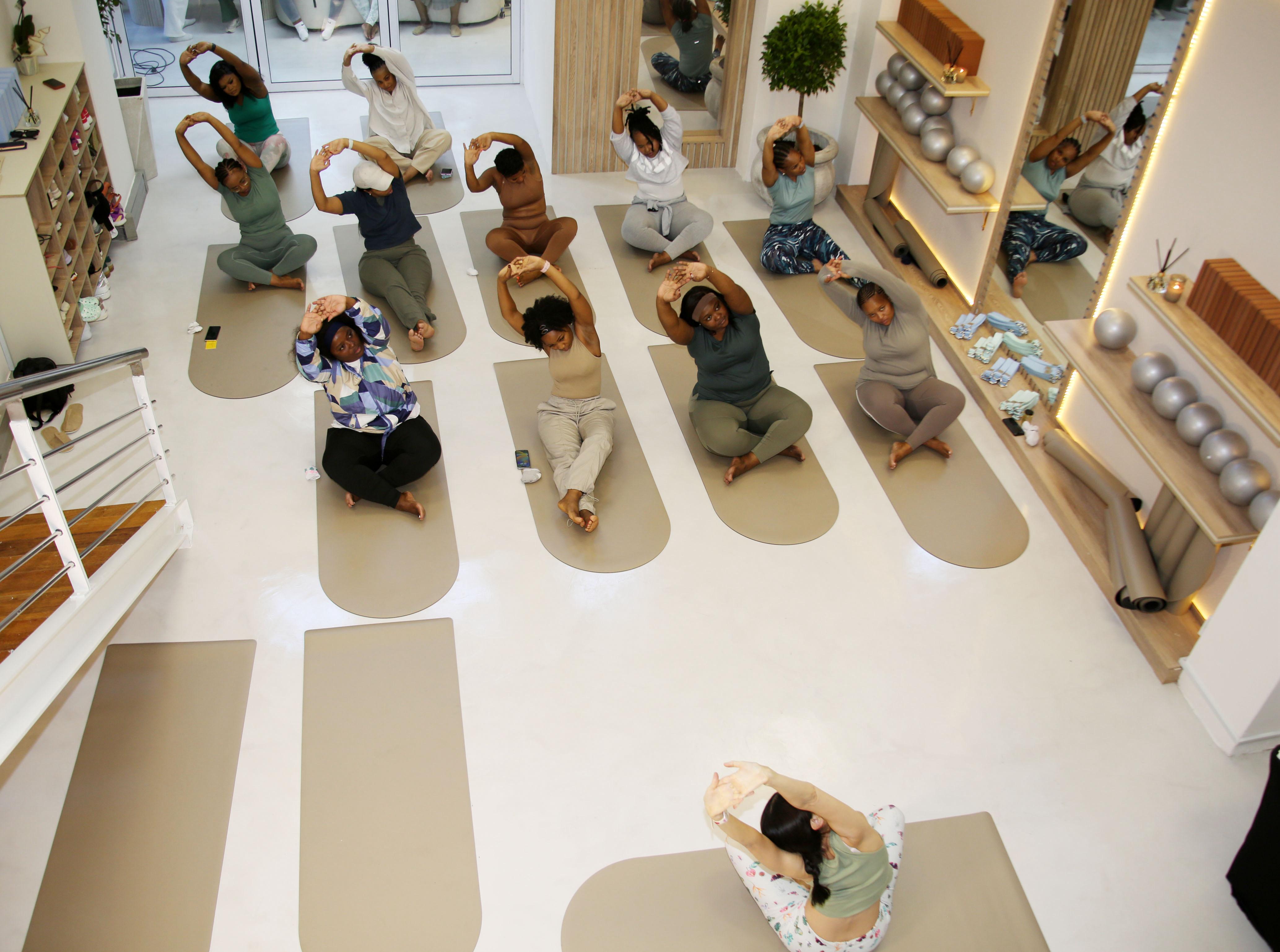
The core of Pilates training for teenagers lies in "gentle guidance and gradual progress", avoiding the high-intensity training mode used for adults. To address hunchback, we can start with basic spinal stretching movements, such as "sitting spinal twist": let teenagers sit on a yoga mat, bend their knees, place their feet on the ground, and put their hands naturally on both sides of the body. Inhale to straighten the back, exhale to slowly twist the body to one side, and swing the hands accordingly to feel the stretching and rotation of the spine. This movement can relax the tense shoulder and back muscles, enhance the strength of the back muscles, and help teenagers develop the habit of holding their heads high and chest out. During each training session, 3 sets can be done, with 8 twists on each side per set.
For the problem of uneven shoulders, the "unilateral scapular retraction" movement is highly effective. Teenagers stand with their feet shoulder-width apart, put a resistance band (low resistance for beginners) around their wrists, and let their arms hang naturally. Inhale to retract one scapula backward and downward, driving the arm to pull the resistance band backward, then exhale to slowly return to the original position. During training, attention should be paid to the symmetry of the movement range and strength on both sides. Through targeted training, the muscle strength on both shoulders can be balanced to improve the uneven shoulder condition. Do 10 times per side per set, with a total of 3 sets.
For mild scoliosis (allowed within the scope of doctor's evaluation), the "four-point support alternate hand lift" is a commonly used training movement. Teenagers kneel on their hands and knees, keep their back straight, and their head and spine in a straight line. Inhale to stabilize the core, exhale to slowly lift one arm, hold for 3-5 seconds, then return to the original position and switch to the other side. This movement can enhance the stability of the lower back core muscles, help balance the muscle strength on both sides of the spine, and prevent the aggravation of scoliosis. During training, it is necessary to ensure that the movement is slow and stable to avoid waist compensation. Do 6-8 times per side per set, with a total of 2-3 sets.
Teen Pilates training also needs to focus on "habit cultivation" and integrate training into daily life. For example, during class breaks, they can do 1-2 minutes of "wall standing" exercise: stick their back, head, buttocks, and calves to the wall, let their hands hang naturally, and feel the correct force points of various parts of the body to help form muscle memory. When doing homework, adjust the sitting posture through Pilates breathing method: inhale to straighten the back, exhale to relax the shoulders, and avoid bending over for a long time. At the same time, it is recommended to do Pilates training 2-3 times a week, with each session lasting 20-30 minutes, which can not only achieve the correction effect but also not affect study and rest.
In addition, parents need to pay attention to accompanying and guiding to prevent teenagers from giving up due to boring training. They can choose the parent-child Pilates mode, where parents and children practice simple movements together, such as "double cat stretch", which can not only enhance parent-child interaction but also allow teenagers to persist in training in a relaxed atmosphere. Through Pilates training, it can not only help teenagers improve existing posture problems but also cultivate their ability to perceive their bodies, allowing a healthy posture to accompany the entire growth process.